Starting a new aquarium is exciting, but the most important work happens before the first fish goes into the tank. Choosing suitable equipment, preparing the water, and allowing the aquarium to establish properly can make the difference between a stable habitat and a stressful beginning.
The best approach to a new aquarium setup is to plan around the animals you want to keep rather than buying fish first and adjusting the environment later. Tank size, filtration, heating, lighting, decoration, water care, and stocking all need to work together.
Start with the Fish and Aquarium Plan
Before purchasing equipment, decide what kind of aquarium you want to create. A freshwater community tank, a species-focused aquarium, and a planted display may have different equipment and maintenance needs. Your choice should also reflect the space available, the time you can devote to care, and the fish’s adult size and behaviour.
Choose an appropriate tank size
A larger aquarium is not automatically easier, but more water generally gives you more room to manage changes in water quality. Small tanks can be appealing because they need less physical space, yet their conditions may change quickly when feeding, evaporation, or maintenance is inconsistent.
Research compatibility before stocking
Fish should be selected for compatible care requirements, temperament, adult size, and activity level. Avoid choosing species solely because they look attractive in a store or photograph. A peaceful community may not suit territorial fish, and active swimmers may not thrive in a cramped layout.
Gather the Essential Equipment
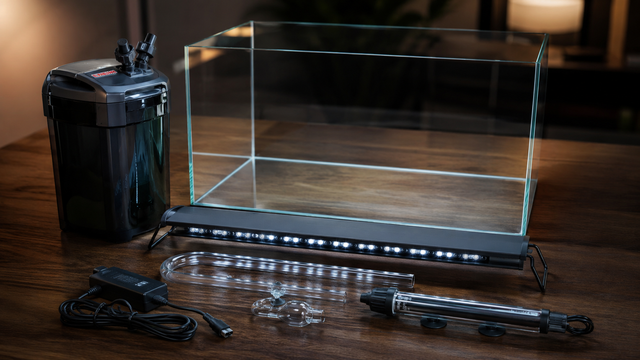
A new aquarium setup usually includes more than a tank and water. Each item has a role in creating a safe, manageable environment. The exact equipment depends on the aquarium type and inhabitants, but the following categories are a useful starting point:
- Aquarium and support: Choose a tank that suits the intended fish and place it on an appropriate, level support.
- Filter: Filtration helps remove particles and supports the biological processes that keep water quality stable.
- Heater and thermometer: Many commonly kept fish require stable water temperature.
- Lighting: Lighting supports viewing and may be important for live plants.
- Substrate and décor: Gravel, sand, rocks, wood, plants, and shelters shape the habitat.
- Water conditioner and test equipment: Help you understand whether the aquarium is ready for fish.
- Maintenance tools: A dedicated bucket, algae scraper, siphon, and fish net.
Prepare the Tank Before Adding Water

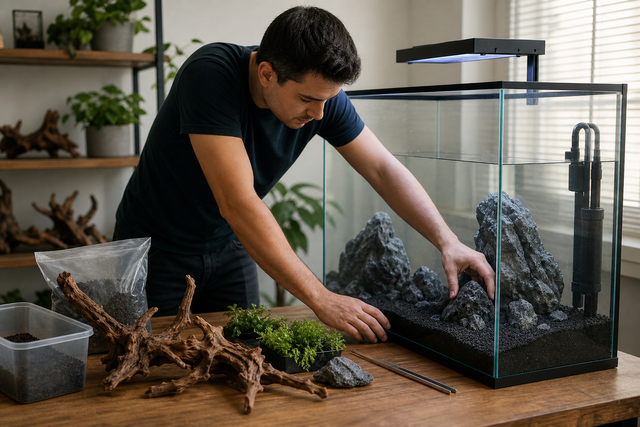
Place the empty aquarium away from direct sunlight, heavy foot traffic, and sources of sudden temperature change. Check that the surface is stable and that you can reach the tank easily for feeding, observation, and maintenance. It is much easier to correct the location before the aquarium is filled.
Rinse new substrate and decorations with water to remove loose dust. Do not use household soaps or cleaning chemicals, which can leave residues that are harmful to aquatic life.
Fill, Condition, and Cycle the Aquarium
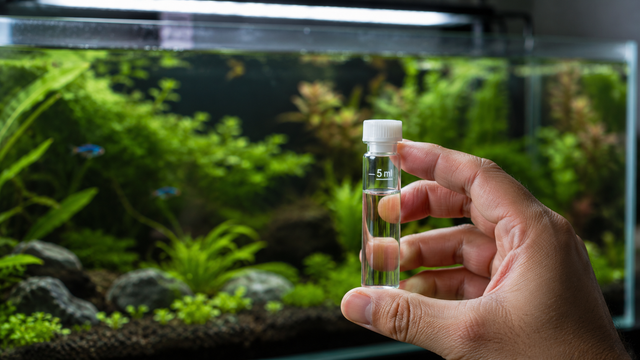
Once the tank is arranged, fill it slowly to avoid disturbing the substrate. Install the filter, heater, thermometer, and other equipment as directed, then confirm that everything is operating correctly.
Why cycling matters
A newly filled aquarium does not immediately have the biological capacity to process waste. During the cycling process, beneficial microorganisms become established in the filter and other surfaces, helping process these compounds as part of the aquarium’s biological filtration. Do not assume that clear water means the aquarium is ready. Cycling takes time, and the process should be monitored with suitable water tests.
Add Fish Gradually and Reduce Stress
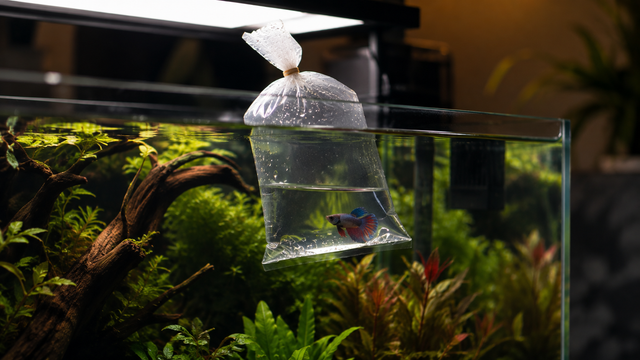
When the aquarium is prepared and testing supports the next step, introduce fish carefully. Adding too many fish at once can place a heavy demand on the aquarium’s developing biological filtration.
- Review the plan: Confirm that the species are compatible.
- Transport fish carefully: Keep the container protected from extreme temperatures.
- Acclimate thoughtfully: Follow a suitable acclimation method.
- Observe after release: Look for unusual swimming or rapid breathing.
- Feed lightly at first: Offer an appropriate amount and remove uneaten food.
Build a Manageable Maintenance Routine
A healthy aquarium depends on regular, measured care rather than occasional major cleanups. Create a routine that fits your schedule and record what you do. Consistency makes it easier to notice changes before they become serious.
How Aqua Farm World Can Support Your Setup
Aqua Farm World provides aquarium guidance and educational content for fishkeepers at different experience levels. Its AI-powered aquarium guidance can help you work through questions related to new aquarium setups, including preparation, care decisions, nutrition, and everyday maintenance.
There is no need to solve every aquarium question at once. Start with a clear plan, make changes carefully, and keep learning as you observe how your fish respond. Explore Aqua Farm World for aquarium guidance, educational setup information, nutrition advice, and help with care or disease-related questions as you build a healthier routine.