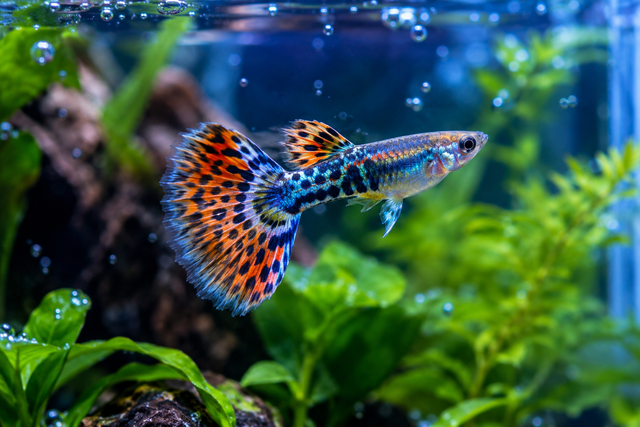
If you've kept guppies for any length of time, you already know how tough these little fish can be. They're often the first recommendation for beginners, and for good reason — guppies are hardy, breed like crazy, and tolerate a wide range of water conditions. But "hardy" doesn't mean "invincible." Sooner or later, almost every guppy keeper runs into a sick fish, and knowing what you're looking at can be the difference between a quick recovery and losing your whole tank.
Below is a rundown of the diseases guppy owners run into most often, what they actually look like in real life, and what tends to work when it comes to treatment.
Why Guppies Get Sick in the First Place
Before jumping into specific diseases, it's worth saying this plainly: poor water quality causes the vast majority of guppy illnesses. Ammonia spikes, nitrite buildup, and infrequent water changes stress guppies out, and a stressed fish's immune system just can't keep up with the parasites, bacteria, and fungi that are present in pretty much every aquarium at low levels all the time.
So if you remember nothing else from this article, remember this: clean water prevents more disease than any medication ever will.
Parasitic Diseases
White Spot Disease (Ich)
This is probably the single most common disease in the aquarium hobby, not just for guppies. It's caused by a parasite called Ichthyophthirius multifiliis.
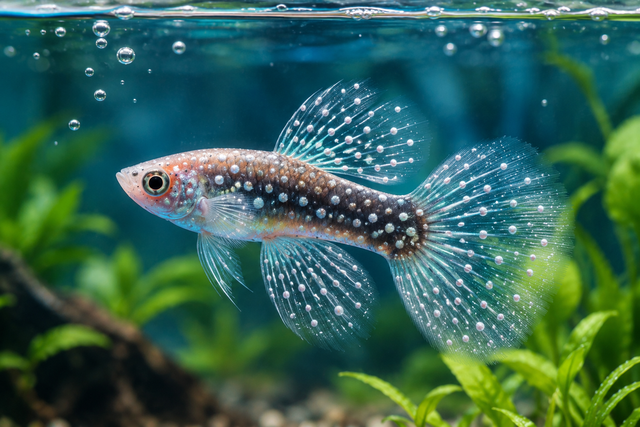
- What to look for: Tiny white dots scattered across the body and fins, almost like someone sprinkled salt on your fish. Infected guppies often scratch themselves against rocks, decorations, or the substrate, and you might notice faster-than-normal breathing.
- Treatment: Gradually raise the tank temperature to around 82°F (28°C), which speeds up the parasite's life cycle and makes it more vulnerable to treatment. Adding aquarium salt and a dedicated ich medication alongside more frequent water changes usually clears it up within a week or two.
Velvet Disease (Gold Dust Disease)
Caused by the parasite Oodinium, velvet gets its name from the fine, golden or rust-colored dusting it leaves across a guppy's body.
- What to look for: A subtle, almost glittery coating on the skin — easiest to spot by shining a flashlight on the fish in a dark room.
- Treatment: Turn off the aquarium lights entirely for several days, since this particular parasite actually relies on light to thrive. Copper-based medications are the standard treatment here.
Guppy Disease (Tetrahymena)
This one deserves special mention because it's specific to guppies and moves fast. It can look a lot like ich at first glance, but instead of distinct white spots, you'll see more of a grayish, mucus-like film spreading across the body, often with visible muscle swelling. Left untreated, it can wipe out a tank in days rather than weeks.
Gill and Skin Flukes
These are external parasites that target the gills and skin. Affected guppies tend to gasp at the water's surface, breathe rapidly, and show red, inflamed gills.
Camallanus Worms
An internal parasite that's genuinely unsettling to discover — you'll actually see thin, red, thread-like worms protruding from the fish's vent. Infected guppies lose weight quickly despite eating normally.
Anchor Worms
Less common but very visible: small, needle-like parasites embedded directly in the skin, usually surrounded by a red, irritated patch.
Bacterial Diseases
Fin and Tail Rot
This is the classic "my guppy's tail looks ragged" problem, and it's almost always tied to poor water conditions.
- What to look for: Fin edges turning white, cloudy, or frayed, with the fin appearing to shrink or fall apart over time.
- Treatment: The first step is always the same — improve water quality. From there, antibacterial treatments like tetracycline or products such as Melafix can speed up healing.
Dropsy
Dropsy isn't really a single disease so much as a symptom of internal organ failure, often kidney-related, and it's one of the tougher conditions to reverse.
- What to look for: A dramatically swollen, bloated belly and scales that stick outward, giving the fish a pinecone-like appearance.
- Treatment: Isolate the fish immediately and try an antibiotic such as kanamycin. Being honest here — by the time dropsy is visible, the prognosis is often poor, but quick action gives the best shot at recovery.
Columnaris (Cotton Mouth)
What to look for: Cottony white or grayish patches around the mouth, back, or fins, sometimes developing into open sores. It spreads quickly and can move through a tank in a matter of days.
Popeye
Exactly what it sounds like — one or both eyes bulge outward abnormally, usually as a result of an internal bacterial infection or, occasionally, an injury.
Fish Tuberculosis
Caused by Mycobacterium bacteria, this one is serious. Symptoms include a curved spine, dramatic weight loss, and skin lesions. Unfortunately, there's no reliable cure, and it can even cause skin irritation in humans who handle infected fish or contaminated tank water, so gloves are a smart precaution if you suspect this.
Fungal Diseases
Body Fungus (Saprolegnia)
Fungal infections almost always take advantage of an existing injury. If a guppy gets nipped by a tankmate or scrapes itself on decor, cotton-like white or gray growths can appear at the wound site.
Gill Rot
A fungal infection inside the gills themselves, which is particularly dangerous since it directly interferes with breathing and can be fatal if not caught early.
Viral Diseases
Haemorrhagic Septicemia
A viral infection that causes blood vessels to rupture, showing up as red streaks or spots on the body, near the base of the fins, and around the eyes.
Physical and Genetic Issues
Not every guppy problem is caused by a pathogen. Some are structural or hereditary.
Swim Bladder Disorder
- What to look for: A guppy that can't swim upright — floating sideways, upside down, or sinking to the bottom.
- Treatment: This is often diet-related. Skip feeding for a day or two, then offer a skinned, cooked pea. It sounds strange, but it works remarkably well for constipation-related swim bladder issues.
Bent Spine (Scoliosis)
Guppies with an S- or C-shaped curve in their spine usually got that way from inbreeding, poor nutrition, or in some cases, fish tuberculosis.
Environmental Poisoning
Ammonia and Nitrite Poisoning
When waste breaks down faster than your filter and water changes can handle, ammonia and nitrite build up fast. Gills can turn dark or purplish, fish gasp at the surface, and in severe cases, an entire tank can crash within hours.
Chlorine Poisoning
Using tap water straight from the faucet without a dechlorinator is a fast way to send guppies into distress — expect erratic swimming and, in bad cases, sudden death.
Three Rules That Prevent Most Guppy Diseases
If you take one thing away from this guide, let it be this: prevention is dramatically easier than treatment.
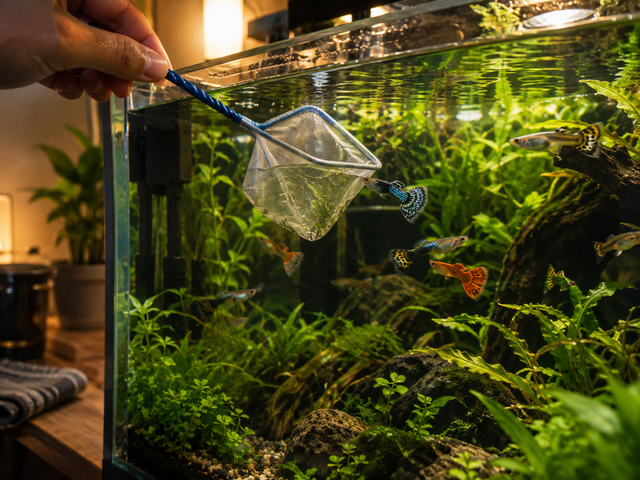
- Change your water consistently. Aim for 20–30% weekly. Poor water quality is behind the overwhelming majority of guppy health problems.
- Quarantine new fish. Anything coming from a pet store should spend two to four weeks in a separate tank before joining your main setup.
- Don't overfeed. Give guppies only what they can finish in about two minutes, once or twice a day. Leftover food breaks down and quietly poisons your water over time.
Final Thoughts
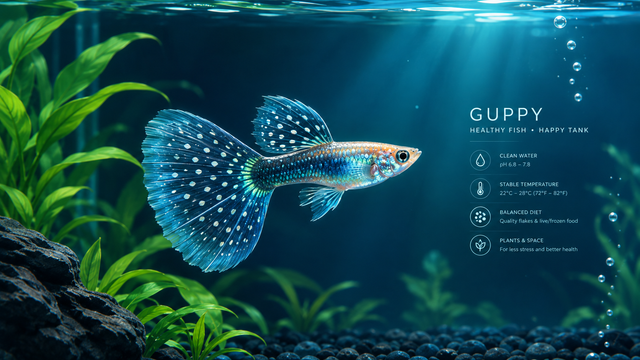
Most guppy diseases are entirely preventable with consistent maintenance, and most of the ones that do show up are treatable if you catch them early. The real skill in fishkeeping isn't memorizing every disease on this list — it's developing the habit of really looking at your fish every day, so you notice the moment something's off.
If you're dealing with a sick guppy right now, pay attention to exactly what you're seeing: white spots, a bloated belly, ragged fins, or something else entirely. That detail is usually enough to point you toward the right treatment.